
Bitcoin has a built-in autopilot called the difficulty adjustment. It is one of the reasons Bitcoin’s supply schedule stays reliable, even as miners come and go.
As of right now, mempool.space is showing the previous difficulty adjustment was -3.28% (a decrease). You can view the live status, including the next adjustment estimate, on the mempool.space Mining Dashboard here: https://mempool.space/mining. (Mempool Space)
What “difficulty” actually is
Difficulty is the network’s way of keeping block production close to one block every ~10 minutes.
Every 2,016 blocks, Bitcoin recalculates difficulty based on how long the last 2,016 blocks took to mine. If blocks came in too slowly, difficulty decreases. If blocks came in too fast, difficulty increases. The Bitcoin Wiki explains this clearly here: https://en.bitcoin.it/wiki/Difficulty. (Bitcoin Wiki)
Bitcoin’s developer documentation also describes the same mechanism and the bounds on how much difficulty can move in a single adjustment here: Bitcoin Developer Docs
What a difficulty drop means in plain English
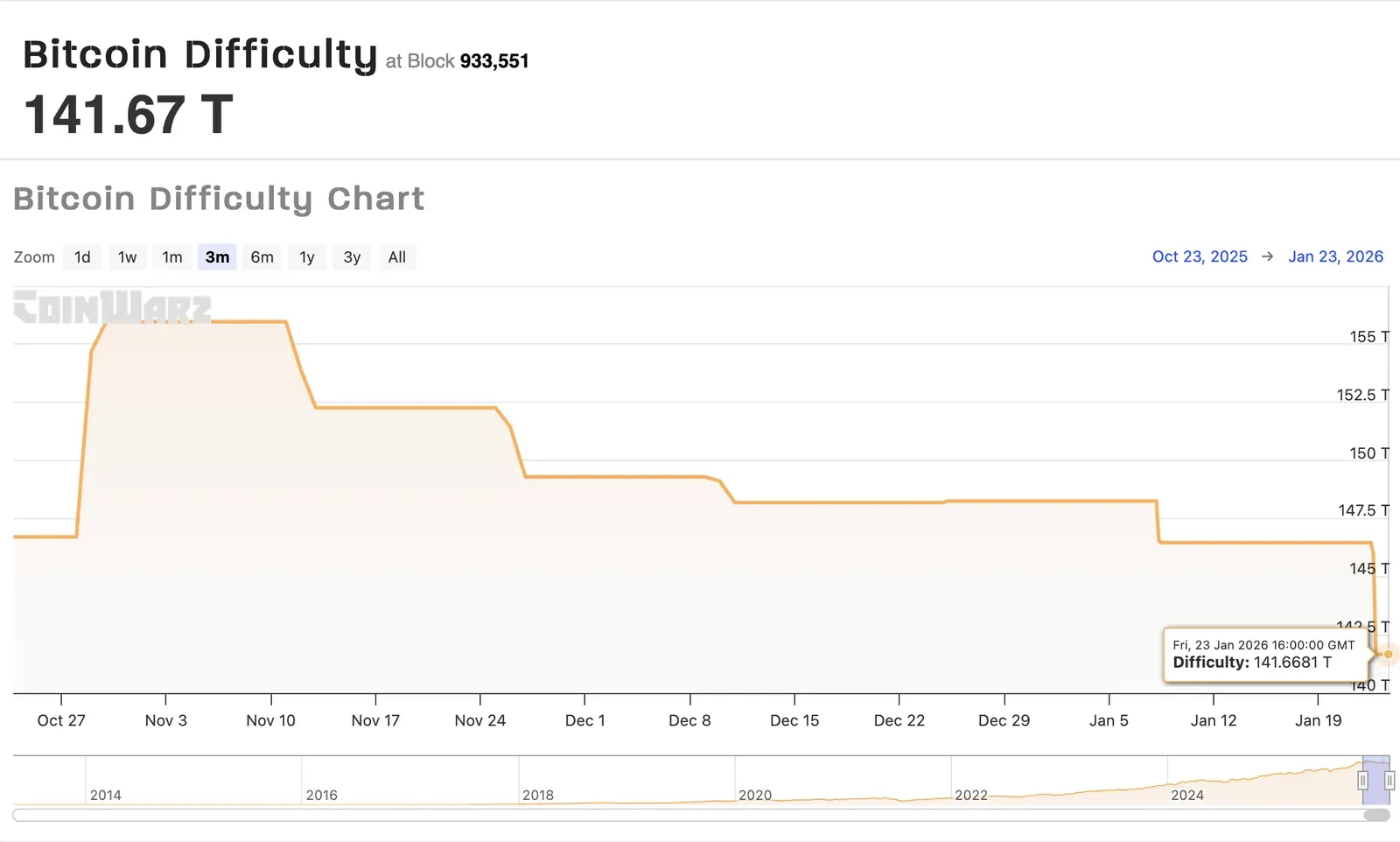
When difficulty drops, the network is acknowledging that blocks were coming in slower than target, so it makes the target easier.
That can be a real tailwind for miners, because it means your hashpower is competing against a slightly easier target than the prior period, all else equal.
No hype needed. It is simply how the protocol works.
The practical takeaway for Bitcoiners
These “quieter” windows tend to happen when the crowd is not paying attention.
Then price heats up, more machines come online, competition increases, and difficulty often trends back up. That is why getting plugged in earlier can feel calmer than trying to rush in later.
Ready to plug in?
If you want to start stacking sats with your own hashpower, browse rigs here.
Not financial advice. Educational commentary on how Bitcoin difficulty adjustments work.