

Bitcoin was designed to move money, peer-to-peer, without intermediaries.
Since 2022, a growing share of Bitcoin transactions have been used for something else: embedding images, tokens, and data files directly into the blockchain. BIP-110 is a proposal to temporarily limit that practice at the protocol level.
Here's what it is, why some miners are choosing to support it, and how you can signal support through Sazmining if it aligns with your values.
What Is BIP-110?
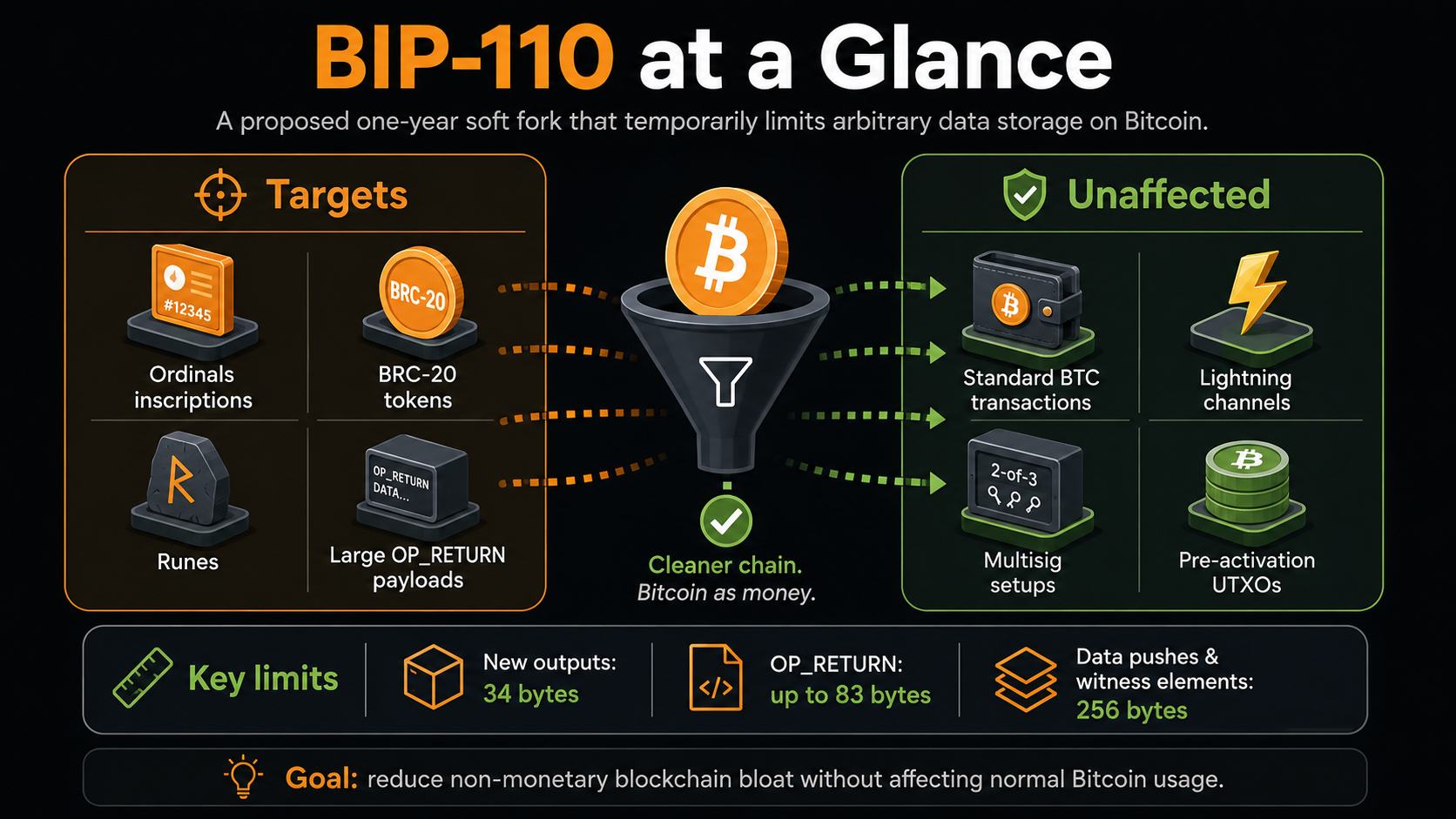
BIP-110 is a proposed one-year soft fork authored by Dathon Ohm. A soft fork is a backward-compatible change to Bitcoin's protocol rules. If activated, BIP-110 limits the size of data fields in Bitcoin transactions for the duration of its deployment. The primary targets are Ordinals inscriptions, BRC-20 tokens, Runes, and large OP_RETURN payloads.
The specific technical limits:
- New outputs are capped at 34 bytes (OP_RETURN is allowed up to 83 bytes)
- Data pushes and witness elements are limited to 256 bytes
- Certain Taproot features used primarily for data embedding are temporarily restricted
Standard monetary transactions, Lightning channels, and multisig setups are fully unaffected. All UTXOs created before activation are permanently exempt.
How Activation Works
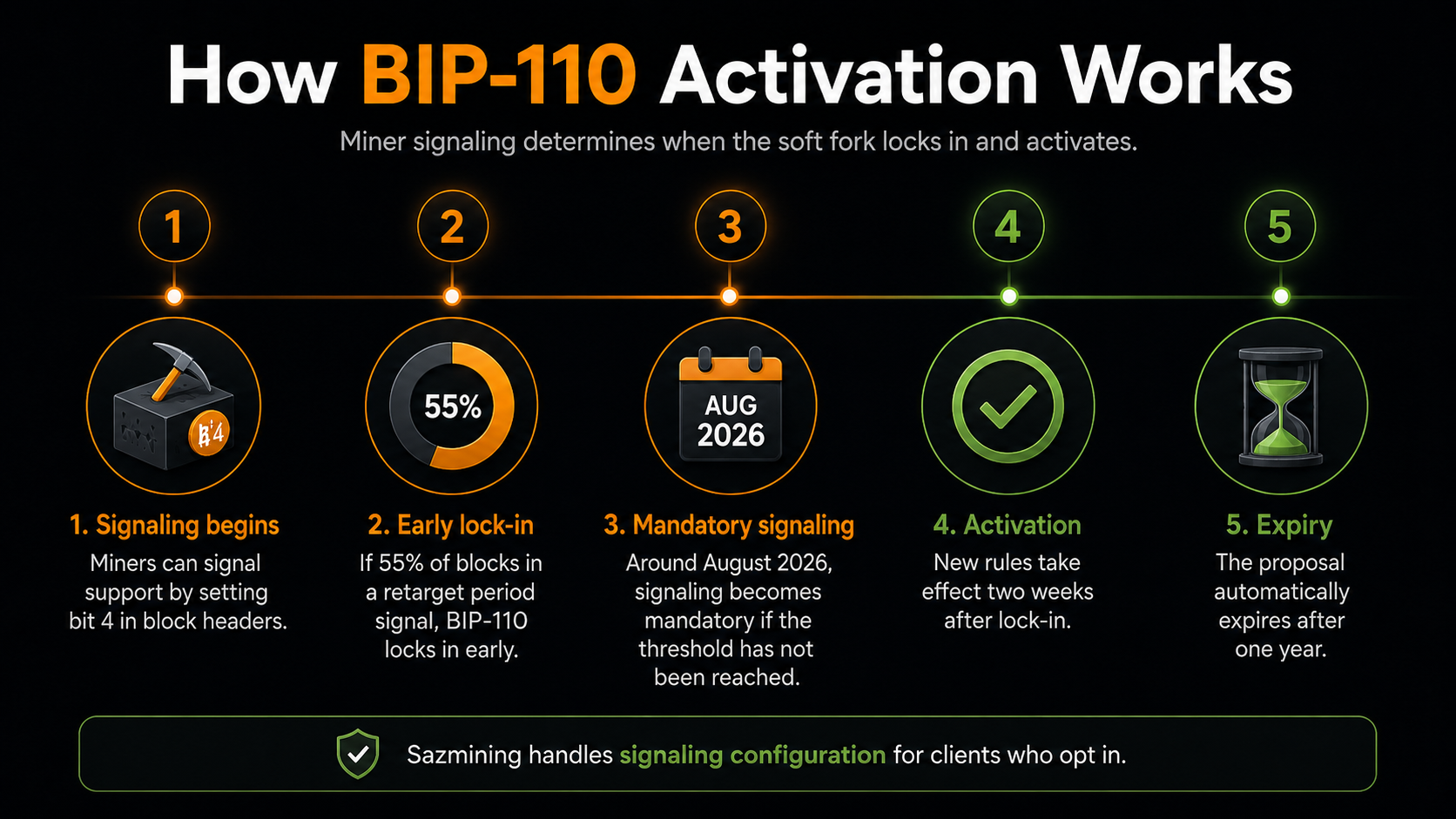
Miners signal BIP-110 support by setting bit 4 in their block headers. If 55% of blocks in a retarget period signal, BIP-110 locks in early. If that threshold isn't reached, mandatory signaling begins around August 2026, guaranteeing eventual lock-in regardless. The new rules take effect two weeks after lock-in and expire automatically one year later.
Sazmining handles the signaling configuration on your behalf when you opt in. You don't need to adjust any rig settings yourself.
What Signaling Means for Sazmining Clients
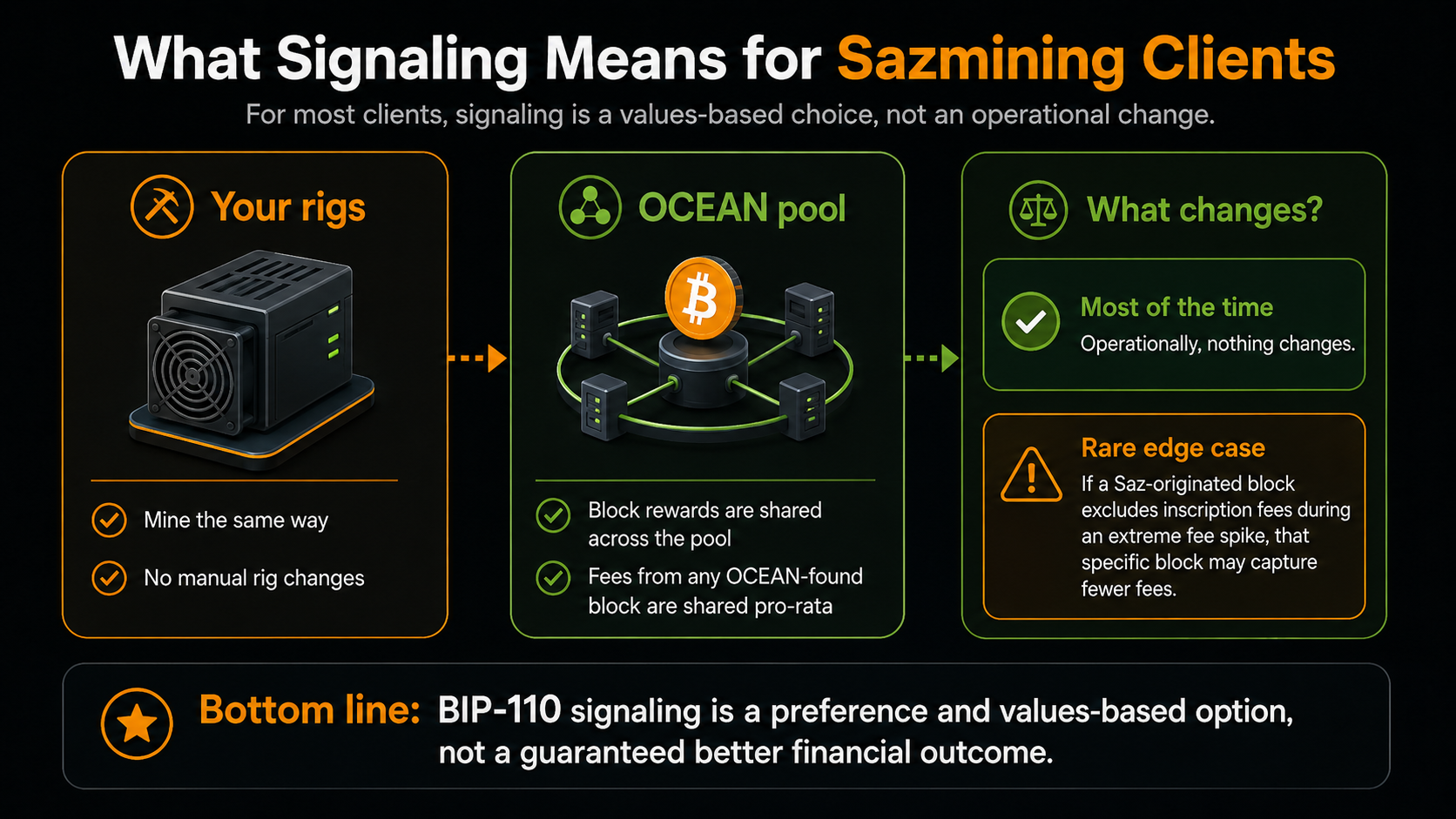
Here's the straightforward answer on revenue: for most clients, nothing changes operationally.
Sazmining has been running Bitcoin Knots as its node software since before BIP-110 was proposed. Bitcoin Knots already filters out the same transactions BIP-110 targets. Signaling for BIP-110 doesn't change how your rigs mine or what goes into your blocks. It's a public vote of support for making transaction filtering a permanent protocol rule, not an operational change.
The OCEAN pool dynamics are also worth understanding here:
When any OCEAN miner finds a block, the full reward, including all transaction fees from that block, is shared with every miner in the pool based on their share contribution. If another OCEAN miner finds a block that includes inscription transactions during a fee spike, Sazmining clients benefit from those fees regardless of their own BIP-110 signal. Signaling doesn't affect that.
There's one additonal scenario worth knowing:
If a Sazmining-originated block is found during an extreme fee event and that block doesn't include inscription transactions, those specific fees aren't captured. During normal market conditions the difference is negligible. During rare events, like the Runes launch coinciding with the 2024 halving, the tradeoff is real.
BIP-110 is a preference and values-based option, not a guaranteed better financial outcome.
The Debate Worth Understanding
There are coherent arguments on both sides of BIP-110.
Supporters argue that non-monetary transactions bloat the blockchain constantly, at every block, permanently. Every full node on the network stores, validates, and relays that data forever. Fee spikes from inscriptions are rare and unpredictable. The infrastructure cost is constant. That's a bad trade for Bitcoin's long-term health.
Critics argue that any transaction paying fees is legitimate demand for block space, that miners need fee revenue long-term as the block subsidy halves, and that setting a precedent for filtering transactions by type puts Bitcoin's credible neutrality at risk.
Both positions have real merit, and Sazmining isn't here to tell you which is correct.
Clients who place Bitcoin's monetary purpose above all else tend to favor signaling.
Clients who want to capture all possible fee revenue regardless of source tend not to.
How to Signal BIP-110 Through Sazmining
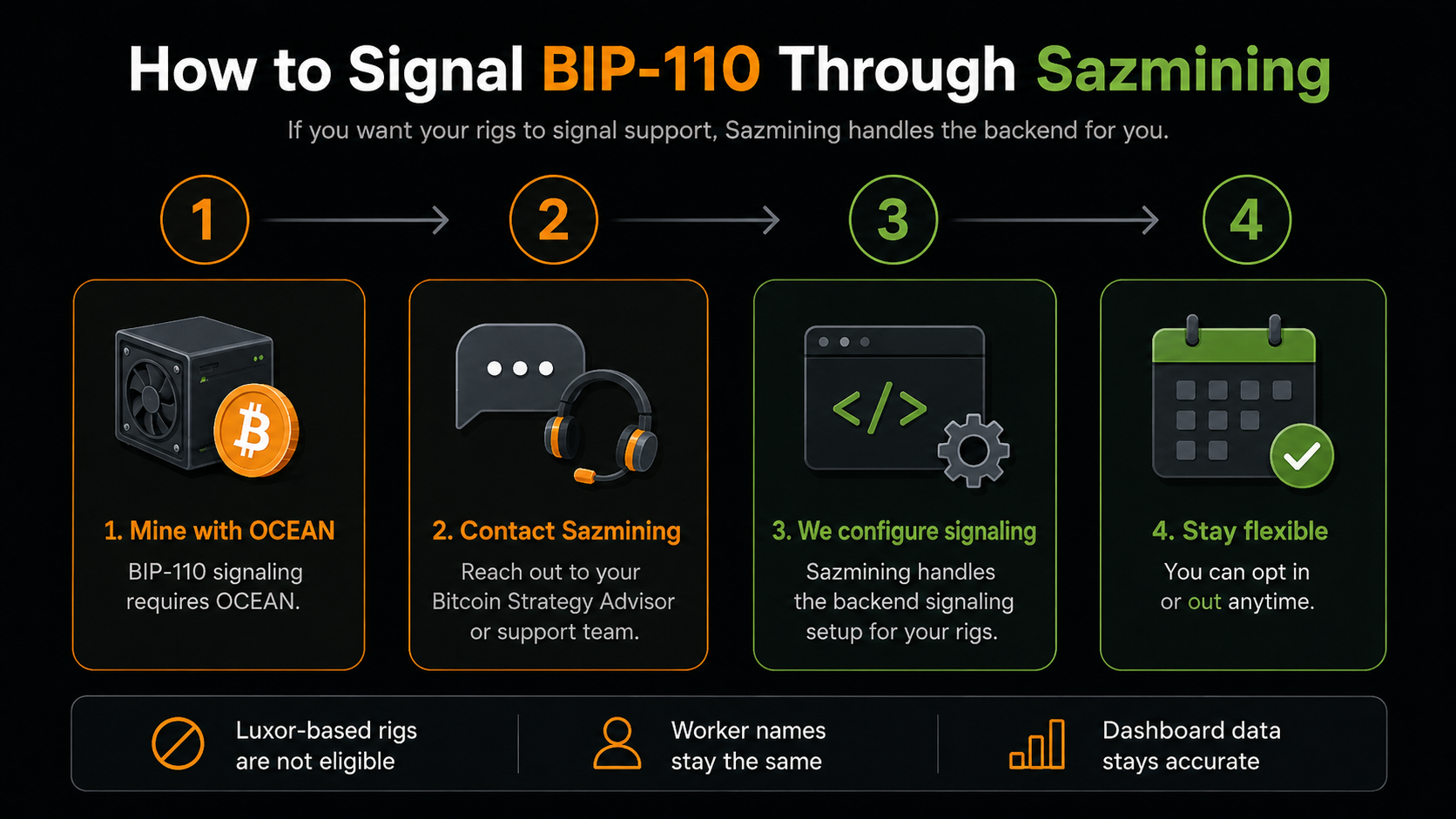
If you'd like your rigs to signal BIP-110, our team handles the backend configuration. Your worker names stay the same and your dashboard data stays accurate.
A couple of things to know:
- BIP-110 signaling requires OCEAN. Luxor-based rigs aren't eligible.
- You can opt in or out any time by reaching out to your BSA or our support team.
👉 To get started, book a call with your Bitcoin Strategy Advisor or email us at support@sazmining.com.